Patricia E. Batha

an ophthalmologist and laser scientist Patricia Era Bath born November 4, 1942, Harlem, New York,
she is an ophthalmologist credited as the first African American woman doctor to receive a
patent for a medical purpose.
Patricia Bath's dedication to a life in medicine began in childhood, when she was first heard
about Dr. Albert Schweitzer's service to lepers in the Congo. After excelling in her studies in
high school and university and earning awards for scientific research as early as age
sixteen, Dr. Bath embarked on a career in medicine. Despite university policies extolling equality and condemning discrimination, Professor Bath experienced
numerous instances of sexism and racism throughout her tenure at both UCLA and Drew. Determined
that her research not be obstructed by the "glass ceilings," she took her research abroad to
Europe. Free at last from the toxic constraints of sexism and racism her research was accepted
on its merits at the Laser Medical Center of Berlin, West Germany, the Rothschild Eye Institute
of Paris, France, and the Loughborough Institute of Technology, England. At those institutions
she achieved her "personal best" in research and laser science, the fruits of which are
evidenced by her laser patents on eye surgery.
she is an innovative research scientist and advocate for blindness prevention, treatment, and cure. Her
accomplishments include the invention of a new device and technique for cataract surgery known as laserphaco, the creation of a new discipline known as
"community ophthalmology," and appointment as the first woman chair of ophthalmology in the United
States, at Drew-UCLA in 1983.
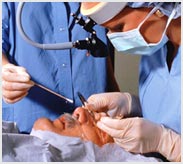
Her interest, experience, and research on cataracts lead to her invention of a new device and method to remove cataracts—the laserphaco probe. When she first
conceived of the device in 1981, her idea was more advanced than the technology available at the time. It took her nearly five years to complete the research
and testing needed to make it work and apply for a patent.
|